|
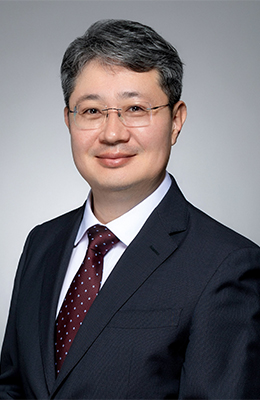
Prof. Han-Yong
Jeon Inha University, South Korea
Title: Review on Eco-friendliness and Sustainability of Geosynthetics Manufacturing and Construction Processes through AI Connection
Bio: Professor Emeritus Han-Yong Jeon is a geosynthetics/technical organic
materials researcher of Inha University, Incheon, South Korea. Since 1998, he is the
director of Geosynthetics Institute Korea Directory and has worked in International
Geosynthetics Society as Council member (2008~2012) and the 6th president of Korean
Geosynthetics Society (2011~2013) and the 32nd President of Korean Fiber Society
(2014~2015). He has published more than 1,124 proceedings in the domestic and
international conferences and published 228 papers including “A Study on the
Radiation Shielding and Absorption Effects of Nonwoven Composites by Monte-Carlo
Simulation Analysis”, applied sciences, 12, 3570, 2022 in domestic &
international ...journals. He wrote 30 Korean and English books including 'Review of
Sustainable Geosynthetics Development Trend with Environmental Adaptive and
Eco-Environmental Performances Point of View’, Geopolymers and Other Geosynthetics,
ISBN 978-1-78985-176-2, IntechOpen, 2020. He has awards of Marquis Who'sWho -
Science and Engineering in 2003~2017 and Top 100 Scientists in the World: 2005/2011
of IBC (International Biographical Centre, UK). Also, he got the 33rd Academy Award
of Korean Fiber Society in 2006 and “Excellent Paper Award of 2012” by The Korean
Federation of Science and Technology Societies. Besides this, he got the 33rd
Academy Award (The Korean Fiber Society), 2006 and the Best Publication Award (Korea
Association of Technical Textile Industry), 2017 and the 41st Prize of Jung-Hun
Textile Industry (Academy Award), 2020.
Abstract: The geosynthetics industry, based on eco-friendly materials and low-carbon manufacturing processes, can enhance sustainability by establishing an AI-integrated data circulation framework throughout the entire lifecycle, including design, construction, and post-construction supervision. In the manufacturing of eco-friendly geosynthetic products, low-carbon and recycled raw materials are utilized with a strong emphasis on environmental sustainability. Recycled polymers (such as PET bottle flakes and recycled PP chips) and industrial byproducts (such as slag and fly ash) can be incorporated into the production of geogrids, geotextiles, and grout materials. AI can be applied to optimize manufacturing process parameters by determining the optimal raw material composition (e.g., recycling ratio, slag-to-cement ratio, basalt fiber content) to achieve targeted mechanical performance while minimizing CO₂ emissions. When geogrids, geotextiles, and geocomposites are applied to civil engineering structures (e.g., slopes, retaining walls, soft ground reinforcement systems, and water barrier systems), they can significantly reduce cut-and-fill volumes, decrease the use of concrete and steel, shorten construction periods, and lower equipment operating time and fuel consumption. During on-site construction, AI technologies can be integrated with drone- and camera-based monitoring systems to enhance construction quality, durability, and service life while reducing environmental impact and material waste. AI can automatically analyze drone and mobile footage to detect geogrid placement direction, overlap length, alignment accuracy, and geotextile damage or tears, providing real-time checklist feedback. Furthermore, excavation volumes, fill quantities, equipment operating time, and transportation distances can be automatically recorded to generate a site-level carbon emissions dashboard. In addition, AI-based simulation of geosynthetics installation, slag grouting operations, and drainage layer construction can optimize equipment movement, minimize idle time and rework, and reduce fuel consumption and operational costs. This contributes to the development of an intelligent construction process optimization system. For post-construction supervision and maintenance, AI-based condition monitoring enables data-driven, targeted repairs, thereby reducing unnecessary over-maintenance and associated resource and carbon waste. By continuously collecting long-term performance data - including settlement, cracking, water leakage, groundwater fluctuations, temperature, humidity, and chemical degradation - a geosynthetic-based digital twin model of the structure can be developed. Through predictive analytics, AI can provide early warnings of performance degradation (such as strength reduction, progressive settlement, or leakage risk), enabling proactive intervention to prevent large-scale structural failure and minimize environmental and social impacts. By integrating and analyzing lifecycle data and continuously feeding insights back into manufacturing, design standards, and construction practices, the geosynthetics industry can establish a virtuous cycle of “low carbon, high durability, and resource circulation.”
|